beginner• 5 min read
3/20/2024
Back Pain from Desk Work
Learn about Back Pain from Desk Work and discover practical strategies to improve your workplace health and productivity.
desk back painlower back reliefergonomics
As a programmer, you get in the zone and forget to move. MoveToZero breaks your sedentary habits without breaking your flow. The perfect stand-up reminder for devs.
14-day free trial, then just $0.99/mo. Cancel anytime.
Programmers typically sit 8-10 hours daily, often in deep focus sessions lasting 2-4 hours without interruption. The combination of mental immersion and screen fixation makes it easy to ignore physical discomfort until damage accumulates.
Extended uninterrupted sitting during coding sprints, often 2-4 hours at a time. Debugging sessions can extend sitting even further. Minimal position changes — most programmers lean forward toward monitors, compressing the spine.
Prolonged sitting compresses spinal discs, especially L4-L5 and L5-S1. Leaning forward toward the monitor increases disc pressure by 40-90% compared to standing.
Stand and do 10 backward bends (press hands on lower back, lean back). Walk for 2 minutes between coding sessions to decompress the spine.
Forward head posture from monitor gazing strains the cervical spine. The "developer's hunch" puts 30-60 lbs of extra pressure on the neck.
Do chin tucks and shoulder blade squeezes every hour. Set your monitor at eye level to reduce forward lean.
Continuous typing and mouse use without breaks can lead to repetitive strain. Carpal tunnel syndrome is 3x more common in programmers than the general population.
Perform wrist circles and flexor stretches every 45 minutes. Shake out your hands during each movement break.
Sitting keeps hip flexors in a shortened position for hours, which may contribute to anterior pelvic tilt and referred lower back pain.
Do standing hip flexor stretches (lunge position) during every break. Even 30 seconds per side makes a difference.
The 50/5 split aligns with natural coding workflow breakpoints — completing a feature branch, finishing a code review, or resolving a bug. Shorter 25-minute Pomodoros work for lighter tasks like documentation or email.
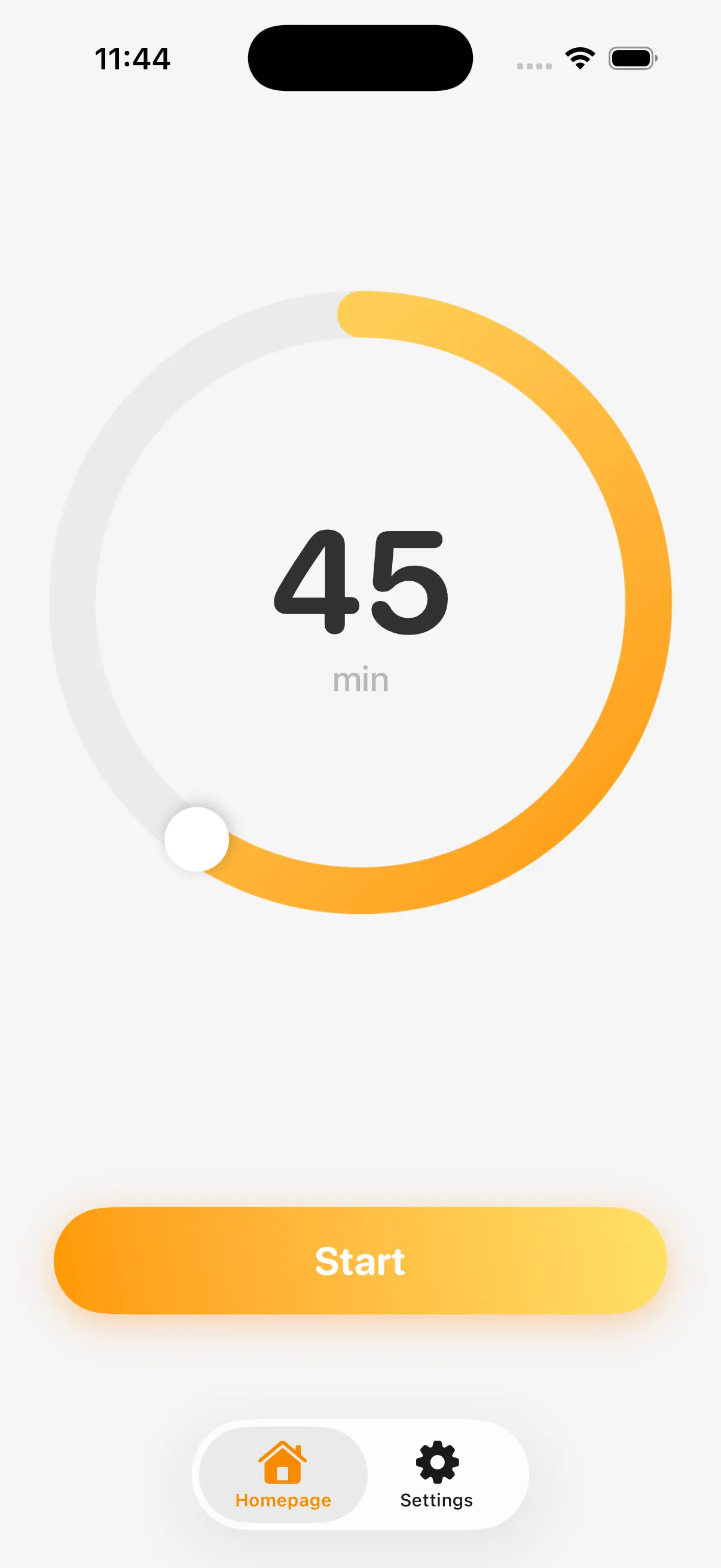
Set MoveToZero to 50-minute focus intervals with 5-minute movement breaks. Enable the Zero-Step Challenge so you must walk to dismiss the alert. This ensures genuine movement, not just standing briefly.
Stand up, interlace fingers above your head, palms up. Reach tall and hold for 20 seconds. Then do 10 gentle side bends left and right. Feel the spine lengthen and decompress.
Extend one arm forward, palm up. Use other hand to gently pull fingers down for 15 seconds. Flip palm down and repeat. Do wrist circles 10 times each direction. Shake out both hands.
Step into a lunge position with back knee straight. Push hips forward gently until you feel the stretch in the front of the back hip. Hold 20 seconds per side.
Sit or stand tall. Squeeze shoulder blades together as if holding a pencil between them. Hold 5 seconds, release. Repeat 10 times. This counters the forward hunch from coding.
Calculate how much time you have spent sitting in your lifetime. Input your daily sitting hours and years of desk work to see the shocking cumulative total.
Use this tool →Generate personalized desk exercise routines based on how long you have been sitting. Get 3, 5, or 10-minute exercise plans you can do right at your desk.
Use this tool →Take our free sitting health self-assessment. Check symptoms like back pain, hip tightness, and fatigue to find out if prolonged sitting is damaging your body.
Use this tool →Combat sedentary lifestyle with science-backed break reminders and gamified challenges.
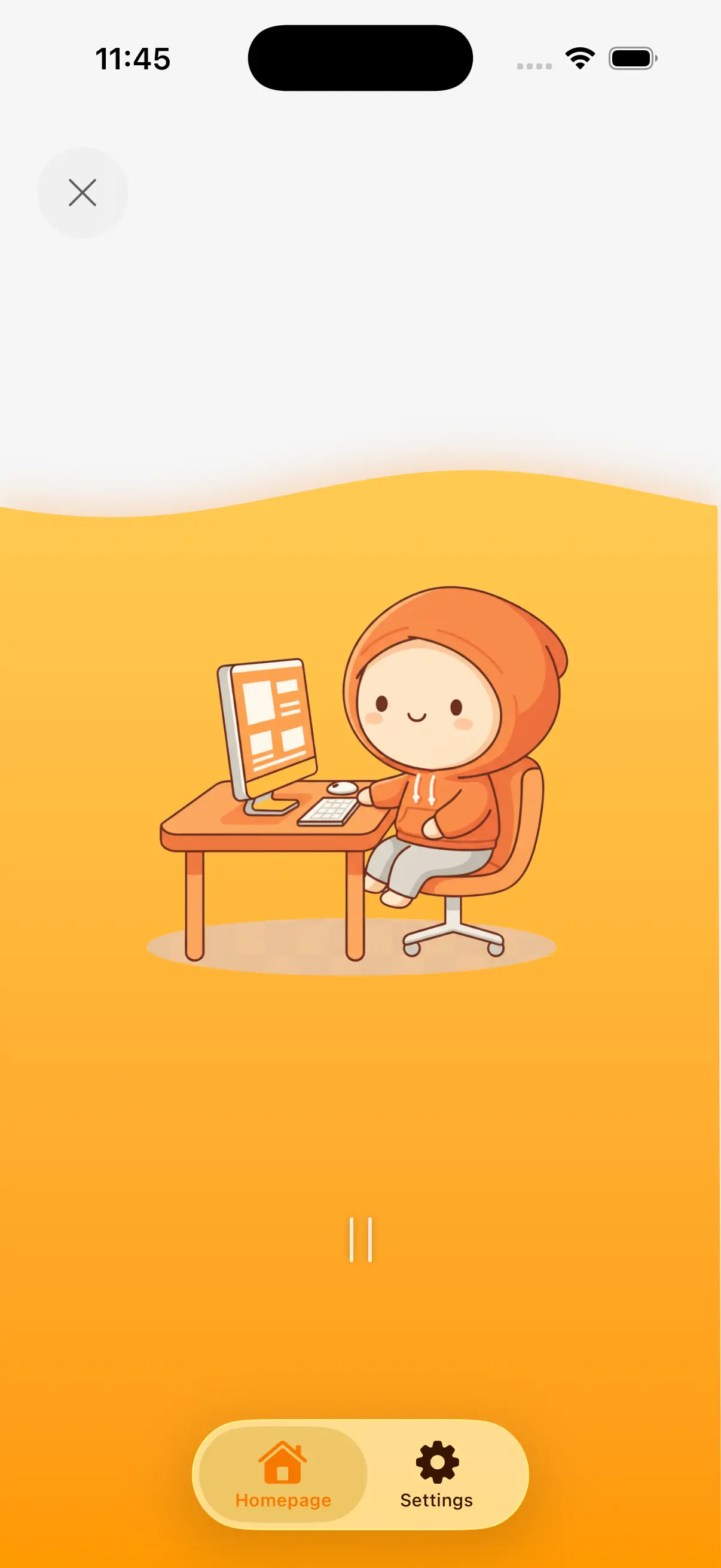
Focus on deep work, not the clock. MoveToZero runs quietly in the background, respecting your workflow.
Our gentle, science-backed nudges remind you to move at the perfect time, balancing sustained productivity with essential physical well-being.
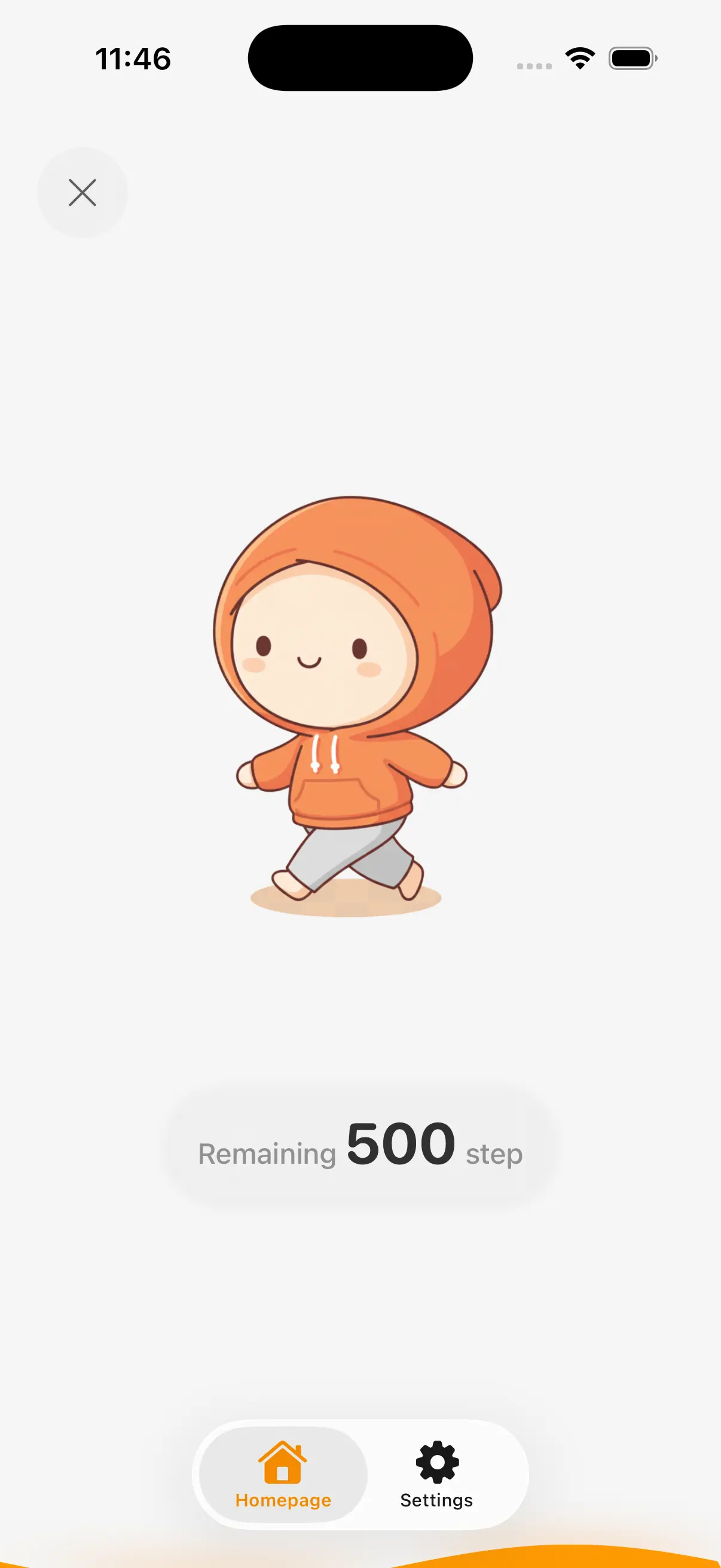
Standing is good; moving is better. MoveToZero turns every break into a dynamic walking challenge.
Using motion sensors, we track meaningful steps—not just standing still. Turn passive breaks into active micro-workouts that energize your body and mind.
Building habits is hard. We make it a game. Track your streaks, unlock badges, and watch your progress grow.
Our positive reinforcement system taps into your motivation, turning daily health goals into a rewarding routine you'll actually look forward to.
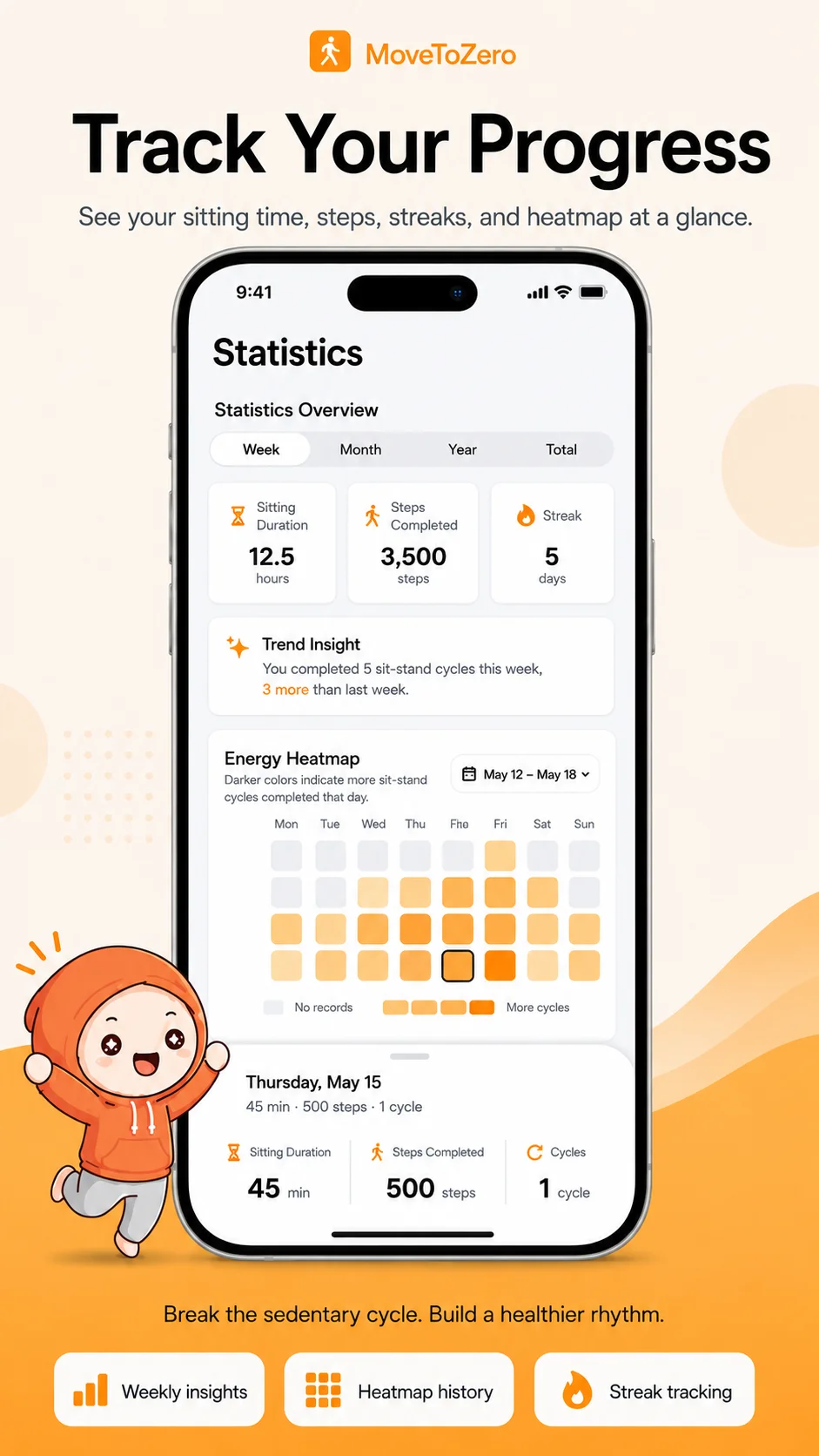
Missed a break? It happens. MoveToZero treats it as data, not failure. Track missed goals to understand your patterns.
Identify when you skip breaks and adjust your routine. It’s a judgment-free way to stay accountable and build a resilient, sustainable health habit.
MoveToZero is built on proven medical research to combat the dangers of a sedentary lifestyle.
“Research from the Mayo Clinic suggests that breaking up sitting time every 30 minutes can significantly reduce blood sugar spikes and improve overall metabolic health.”— Mayo Clinic
Expert-backed content to help you combat sedentary lifestyle
Comprehensive guide to health risks of prolonged sitting
Read Complete GuideLearn about Back Pain from Desk Work and discover practical strategies to improve your workplace health and productivity.
Learn about Metabolic Syndrome Risk and discover practical strategies to improve your workplace health and productivity.
Learn about Heart Health & Sitting and discover practical strategies to improve your workplace health and productivity.
Learn about Sciatica from Sitting and discover practical strategies to improve your workplace health and productivity.
Get answers to common questions about MoveToZero.
Every 45-60 minutes. MoveToZero uses the Pomodoro technique adapted for developers: focused coding sprints followed by 2-5 minute movement breaks. This cadence prevents the spinal compression and hip tightness that builds up during long debugging sessions.
MoveToZero runs as a standalone iOS app with smart notifications. It won't interrupt your flow — the gentle reminders appear at natural break points. Many developers set it to align with git commits or code review cycles.
For deep focus work like algorithm design or architecture planning, try 50-minute focus sessions with 5-minute breaks. For lighter tasks like code reviews or documentation, 25-minute Pomodoro cycles work well. MoveToZero lets you customize both.
Yes. Studies show that programmers who sit 8+ hours daily have significantly higher rates of herniated discs, carpal tunnel syndrome, and chronic lower back pain. Regular movement breaks reduce these risks by up to 40%.
If you experience severe or persistent pain, numbness, or tingling that doesn't improve with movement breaks, consult a healthcare professional. MoveToZero is a wellness tool, not a medical device. Early intervention can prevent chronic conditions.
Join thousands of professionals improving their focus and physical well-being with MoveToZero. Start your 14-day free trial today.
Download on App Store14-day free trial, then just $0.99/mo. Cancel anytime.